I decided to join my first Data Science Hackathon last weekend, and I’ve got to say, I’m super impressed with what my team and I achieved together. Feel free to check out our code here. Here’s a little bit about my experience:
1. Team Assembly
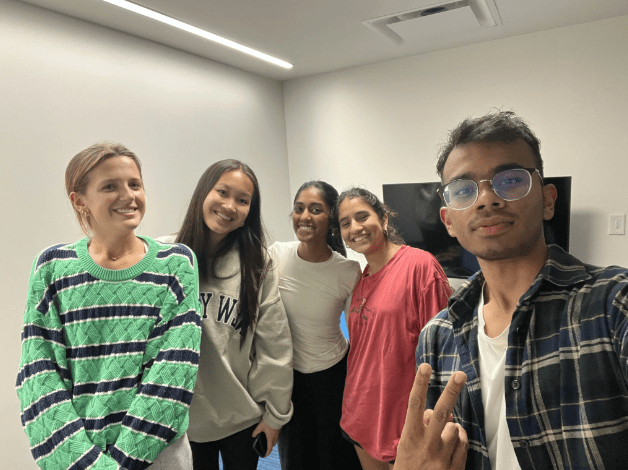
Kicking off the hackathon, the initial step was to put together a team I felt was up to the challenge. My friend Jeslyn, who’s part of the data science club at Georgia Tech, clued me in about the hackathon, and together, we reached out to a couple more friends, forming a diverse four-person team. Since it was the first hackathon for all of us, our primary objectives were to hone our data analytics skills, successfully complete a project, and soak up everything about how hackathons operate to gain valuable experience!
2. Project Creation
The hackathon presented us with four intriguing tracks: Generative AI, Healthcare, Finance, and Sports. We unanimously decided to dive into the Sports track. Our decision was driven by our collective firsthand experiences and a keen awareness of the numerous challenges within the sports industry that we were eager to address. This led to the creation of “Athlete Forecast,” a pioneering tool designed to transform the collegiate football recruiting landscape.
“Athlete Forecast” stands out by offering recruiters a sophisticated platform to evaluate high school football talents with an unprecedented level of precision. It invites users to enter key metrics for potential recruits, including height, weight, star ranking, and an NCAA-assigned rating. At its core, the tool harnesses a state-of-the-art algorithm and a rich dataset of historical performance, aligning recruits’ metrics with those of current college athletes who shared similar profiles during their high school days.
3. Implementation
Our implementation of “Athlete Forecast” integrates a user-friendly interface with advanced data analytics to streamline the collegiate football recruiting process. Here’s a breakdown of how it works:
Input Stats: The journey begins with recruiters inputing essential statistics of potential recruits, such as height, weight, star ranking, and NCAA-assigned rating, into the application’s intuitive interface. This step ensures that the analysis is grounded in quantifiable metrics that are crucial for evaluating an athlete’s potential.
Statistical Analysis: At the heart of “Athlete Forecast” is a sophisticated analysis powered by Euclidean mathematics and a proprietary algorithm. This algorithm takes the input data and conducts a thorough comparison against a comprehensive database. This database is not just any collection of information; it’s a meticulously curated repository of historical data on high school football recruits and their subsequent performance at the collegiate level. By analyzing this data, “Athlete Forecast” can identify patterns and correlations that might not be immediately obvious.
Matching Process: Based on this rigorous analysis, “Athlete Forecast” identifies past college athletes who had similar high school statistics to the input recruit. This matching process is where the application truly shines, offering a glimpse into the potential future performance of recruits by drawing parallels with athletes who have already navigated the transition from high school to college.
Output: The culmination of this process is the presentation of the most recent statistics from the 2023 NCAA season for the college athletes who most closely match the input recruit’s profile. This output is more than just numbers; it’s a powerful tool that recruiters can use to make informed decisions. By comparing the recruits with athletes who have similar backgrounds and have succeeded at the collegiate level, recruiters can better predict the recruits’ future performance.
Initially, “Athlete Forecast” zeroes in on Wide Receivers, laying the groundwork for what promises to be a comprehensive tool for various positions in American College Football. As we ambitiously plan to broaden its scope to include more positions, we’re also eyeing the integration of machine learning to enhance the accuracy of our proprietary algorithm. By doing so, our vision for “Athlete Forecast” extends beyond mere innovation; it’s about fundamentally transforming the way recruiters project the trajectories of aspiring athletes. This integration will enable the algorithm to learn from new data continuously, improve its predictive accuracy over time, and tailor its analyses to the unique dynamics of each position in football. Our commitment is not just to keep pace with the evolving landscape of sports analytics but to set new benchmarks for how potential is identified and nurtured in the field of collegiate football.
4. Conclusion
This weekend was packed with learning and skill-building that I’m confident will be incredibly beneficial for my future. I dove into data scraping and honed my skills in using pandas for data analysis. Taking on the full-stack development of our application allowed me to refine my abilities in CSS, HTML, and JavaScript. Working with Flask for the backend was a new experience that further enhanced my Python skills. All in all, the hackathon was not only an excellent opportunity for growth but also a fun time with friends. I’m definitely eager to join another hackathon soon!
 Chloe Magdalena Nicola
Leave a comment